

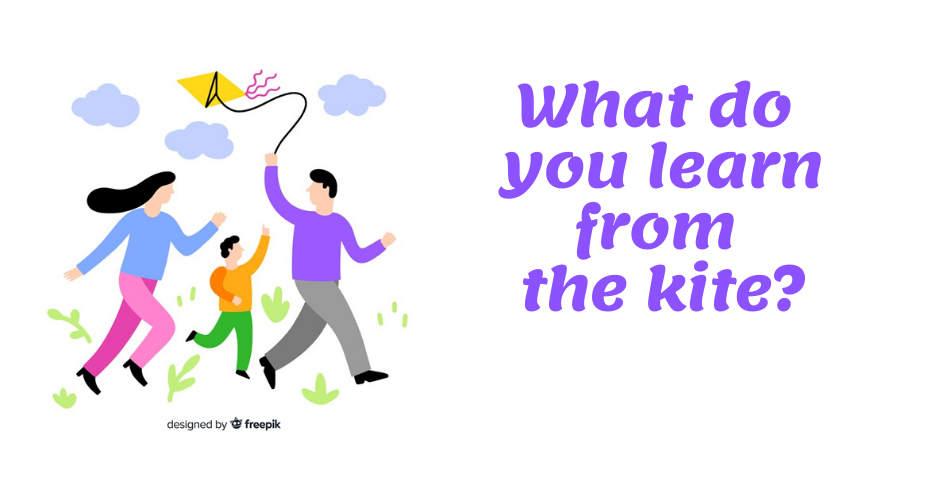
A boy was flying a kite with his father in an open field. The kite climbed beautifully against the sky, pulling at the string, seemingly straining to go higher. After a while, the boy turned to his father and asked what was keeping the kite up.
"The string," said his father.
"But Dad," said the boy, "it's the string that's holding the kite down."
The father smiled and asked his son to watch carefully. He broke the string. The kite, freed from its constraint, did not soar higher. It tumbled, spun, and fell to the ground.
Sometimes the things that appear to be holding us back are the very things that are helping us fly. This is one of the most counterintuitive and important insights in all of personal development, and it is worth spending some real time with.
The Paradox of Constraint in Human Life
We live in a culture that has elevated freedom as an absolute good. More choices, fewer limits, unlimited options, these are presented as the conditions for a flourishing life. And there is truth in this. Genuine oppression, unfair restriction, and unnecessary limitation cause real harm and deserve to be challenged.
But there is another truth that this narrative often obscures: that constraint, structure, and limitation are not simply obstacles to growth but frequent conditions for it. The kite rises because of the string, not despite it. The string creates the tension that produces lift. Without it, there is no flight.
This is not a metaphor that only applies to kites. It maps onto some of the most fundamental dynamics of human life, creativity, discipline, relationships, identity, and meaning.
How Constraints Drive Creativity
It is a well-documented paradox in the psychology of creativity that people produce their most innovative and original work not when given unlimited freedom but when working within specific constraints. The sonnet form, fourteen lines, strict rhyme scheme, prescribed metre, has produced some of the greatest poetry in the English language precisely because the constraint forced the poet to find the right word, not just any word. The architectural brief that specifies an exact budget, site, and functional requirement produces more interesting buildings than the blank canvas commission.
When constraints are absent, the creative mind tends to be paralysed by the infinity of options. When constraints are present, they focus the attention, force specific choices, and create a productive tension between what you want to express and the material you have to express it with. The result is often work that the artist or maker would never have produced without the limitation.
This applies to everyday creative challenges as much as to artistic ones. When you have limited time, you make decisions you would otherwise endlessly defer. When you have limited budget, you find solutions you would never have explored with unlimited resources. When you have limited options, you find the one that actually works rather than continuing to search for the theoretically perfect one.
The String in Your Own Life Right Now
Think about the constraints in your current life that feel most frustrating. The job you have not yet managed to leave. The relationship that requires compromise. The physical limitation that prevents certain activities. The financial constraint that restricts certain choices. The time pressure that leaves little room for what you love.
It is worth asking, about each of these: what is this constraint making me do that I would not otherwise do? What is it developing in me? What would be absent from my life if this constraint were removed tomorrow?
This is not an exercise in toxic positivity, in pretending that difficult things are secretly good. Some constraints genuinely are just obstacles, and working to remove them is the right response. But many constraints that feel like they are simply blocking the path are, on closer examination, part of what is creating the path. The pressure of a difficult family situation develops capacities for patience and empathy that an easier life would not have required. The constraint of limited resources develops resourcefulness and creativity. The limitation of time develops the ability to prioritise, which is itself one of the most valuable skills a person can have.
What Setbacks Are Actually Preparing You For
The kite metaphor is particularly useful when applied to setbacks and apparent failures. We tend to experience setbacks as pure loss, something has been taken from us, a path has been closed, a goal has been delayed or denied. But many of the people who have made the most significant contributions to human knowledge, culture, and wellbeing describe some of their most devastating setbacks as the experiences that made their eventual achievements possible.
The business that failed taught the entrepreneur the specific lessons that made the next venture succeed. The relationship that ended painfully developed the emotional intelligence that made later relationships richer. The career rejection that seemed catastrophic created the circumstances that led to a different path that turned out to be far more aligned with the person's genuine abilities and values.
This does not mean that setbacks are secretly blessings in disguise, or that everything happens for a reason in some predetermined cosmic scheme. It means that the human capacity for growth is so powerful that it can find genuine development in almost any adversity, provided that the person does not collapse completely under the weight of the difficulty, but instead asks the question: what is this preparing me for?
The String That Tension Requires
Any meaningful goal involves tension, the gap between where you are and where you want to be. This tension is uncomfortable. It is the discomfort of not being good enough yet, of having to work at something that does not come naturally, of the repeated failure that precedes mastery. Many people relieve this tension by abandoning the goal. The kite falls to the ground.
The ability to stay in productive tension, to remain committed to a goal through the period of sustained discomfort that precedes its achievement, is one of the most distinguishing characteristics of people who actually achieve the things they set out to achieve. It is not talent that makes the difference. It is the willingness to remain in the tension of the string.
This capacity can be developed. It develops through the experience of completing difficult things, of staying with something until it is finished, of discovering that the discomfort of the tension is finite and that the satisfaction on the other side is real. Every difficult thing you have finished, every project you completed when you wanted to quit, every hard conversation you had when you wanted to avoid it, every morning you showed up when you did not feel like it, has increased your capacity to stay in productive tension.
Relationships as Kite Strings
Healthy relationships involve constraint. They require compromise, adjustment, and the limitation of certain freedoms in exchange for genuine connection. A relationship in which you can do absolutely anything you want without consideration for the other person is not a relationship, it is a mirror. And mirrors do not challenge you to grow.
The constraints of genuine relationship, the need to consider another's perspective, the requirement to communicate rather than assume, the necessity of repair after conflict, the discipline of showing up consistently even when it is inconvenient, are the string that creates the lift of genuine intimacy. Remove the constraints entirely, and the relationship falls.
This does not mean that unhealthy constraint, control, or abuse should be accepted in the name of growth. Those are different things entirely. The string of a kite is a mutual support, it holds the kite up while the kite pulls the string upward. A relationship that simply holds one person down without generating any corresponding lift is not a kite string. It is an anchor.
Discipline as the String of Your Own Potential
Perhaps the most intimate application of the kite metaphor is in the relationship between discipline and potential. Your potential, the capacities, talents, and possibilities that exist within you, is not self-realising. It requires the string of structured practice, consistent effort, and the willingness to constrain some short-term freedoms in service of long-term development.
The musician who practises daily, the writer who shows up to the page even without inspiration, the athlete who trains when they would rather rest, the professional who continues to learn after they have reached a level of competence, these are people who understand, perhaps intuitively, that the string does not hold them down. It holds them up. The discipline is not the enemy of their gifts. It is the condition for them.
Without the string of consistent practise, potential remains potential. It is a kite without a string, tumbling without direction. The constraints you place on yourself, the commitments, the routines, the limits you set on distraction and short-term gratification, are not restrictions on your freedom. They are the means by which your freedom becomes something real.
Frequently Asked Questions
How do I know whether a constraint in my life is productive or genuinely harmful?
The key distinction is between constraints that create tension towards growth and constraints that simply suppress. A productive constraint is one where you can point to something it is developing, enabling, or protecting that matters to you. A harmful constraint prevents development, damages your health or dignity, or is maintained not by any genuine purpose but by fear, habit, or other people's interests rather than your own. When a constraint feels genuinely oppressive, it is worth asking honestly whether it is the constraint itself that is the problem or your relationship with the discomfort it creates, and sometimes the answer is the former, which means working to change it.
What if my constraints are things I cannot change?
When constraints are genuinely unchangeable, a health condition, a family responsibility, a circumstance beyond your control, the work is in finding the latitude that does exist within them and in developing the qualities that the constraint requires. Viktor Frankl, writing about survival in a concentration camp, argued that even when every external freedom has been stripped away, the last freedom, the freedom to choose how you respond, remains. This is not a comfortable or easy truth. But it is a real one. The kite metaphor offers some comfort here: the unchangeable constraint may be creating conditions for growth and development that a more comfortable life would not have produced.
Is this just a way of telling people to accept difficult circumstances they should be fighting to change?
No. The kite metaphor is not an argument for passive acceptance of all constraint. It is an argument for looking more carefully at the constraints in your life before assuming they are purely negative. Some constraints deserve to be challenged and changed. Others deserve to be worked with rather than against. The wisdom is in developing the judgement to tell the difference, and that judgement is itself something that only develops through experience with constraint.
Can this perspective help with grief or loss?
Many people who have navigated significant grief describe a version of this experience: that the loss, while genuinely devastating and not something they would ever have chosen, produced growth, insight, and depth of character that would not otherwise have been available. This is not to suggest that grief is secretly a gift. It is to acknowledge that the human spirit has a remarkable capacity to find growth even in the most painful circumstances. The kite is not always flying. But the string is always there, even when the kite has fallen, ready to provide lift again when the conditions allow.
How do I apply this lesson practically every day?
The simplest daily application is a single question when you encounter a constraint or frustration: what might this be making possible that would not otherwise be possible? You do not need to force an answer. Sometimes the honest answer is that you cannot see anything. But asking the question creates a cognitive stance of curiosity towards difficulty rather than pure resistance, and that shift in stance, sustained over time, changes the relationship between you and the constraints of your life in ways that are genuinely liberating.
Conclusion
The kite falls when the string breaks. It flies because of the tension that the string creates. This simple physical truth maps onto some of the most important patterns in human experience: that creative work is made possible by constraint, that growth is produced by difficulty, that meaningful relationships require limitation, that disciplined practice is the condition for genuine freedom. The next time something in your life feels like it is holding you back, spend a moment before reaching for the scissors. Ask what might be holding you up. The answer might change everything.
← Back to all articles